In this guide
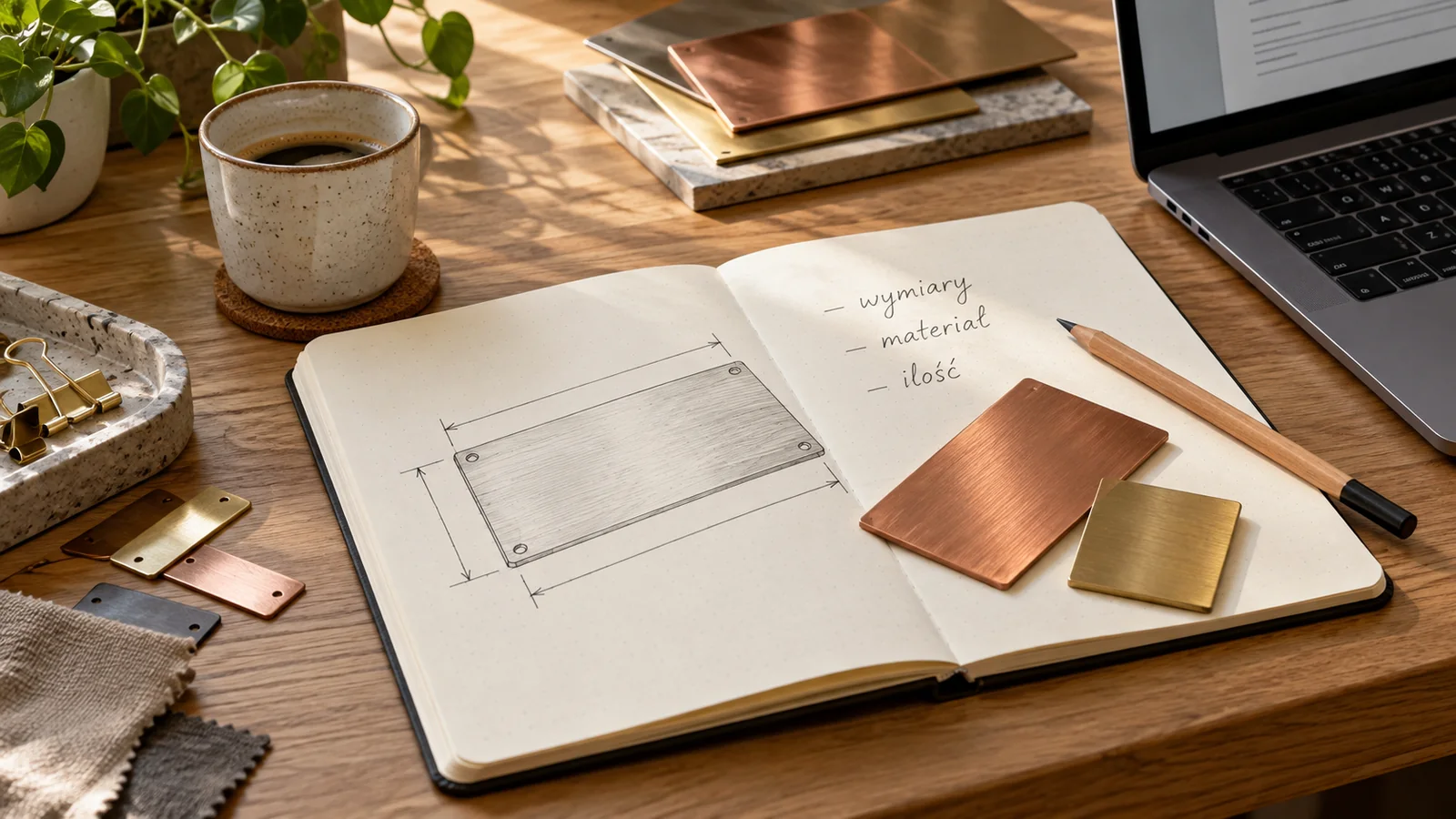
In made-to-order businesses, most enquiries are incomplete. A customer gives the width but not the height, says “brass” without specifying a finish, or mentions the delivery country only in the third message. Sometimes they reply after a week; sometimes they never return.
I have seen this at CopperAndCraft since 2018. Custom panels, tiles and copper or brass pieces: each enquiry meant reading dimensions, material, quantity and delivery market, then calculating manually and asking for missing details. Some cases closed quickly; others dragged on because one detail was missing or a reply came too late.
Automation can help only when you first know what actually repeats. Before building anything in n8n, Make or another tool, check a few things manually.
1. Choose one enquiry type
Do not start with “all enquiries”. Pick a recurring case: custom panels, furniture in three sizes, metal parts based on a simple pattern or sets with a limited range of variants.
Collect 10–15 real, anonymised messages of that type. See which fields appear almost always and which hardly ever. That is your first scope.
2. List what a quote really needs
List the fields you must know to give a price without guessing. For custom panels, that might be:
Product / collection
What does the customer want?
Dimensions
Width × height, with units.
Material
For example, copper or brass.
Finish / patina
An agreed variant or name.
Quantity
Number of pieces ordered.
Delivery country
Affects shipping cost and timing.
For each field, record whether it is mandatory, whether you can ask for it later and what a valid answer looks like. If calculation rules are not written down, do that now. Automation without approved rules only accelerates mistakes.
3. Measure today’s handling time
Take 15–20 recent enquiries of your chosen type and measure:
- minutes spent reading the data,
- how often you ask follow-up questions,
- how often you correct your own calculation,
- how long the customer waits for a first reply.
The figures need not be perfect. An approximate average is enough to check later whether work really became faster.
4. Separate calculation from decisions
Some enquiries fit a formula, such as area × rate + finish surcharge. Others need your judgement: an unusual shape or finish, or a connection to another part.
A well-designed pilot leaves those cases to a person. It must not guess dimensions or invent prices when data is missing.
5. Only then choose a tool
With one enquiry type, defined fields, written rules and measured timing, you can consider a small pilot. The simplest version:
- extracts information from a message,
- checks what is missing,
- calculates using your rules,
- prepares a reply draft for approval.
- 01Enquiry
- 02Read data
- 03Check gaps
- 04Calculate
- 05Draft reply
Missing information or an unusual case → follow-up questions or manual review. Always review the draft before sending.
It need not email customers automatically. At first, preparing material for review is enough.
Read more in Quote automation — where to start?
What does this have to do with a website or store?
Sometimes the real issue is an unclear offer. Customers do not know which dimensions to give, which materials exist or how ordering works. First organise the presentation.
If you sell on Etsy and plan an independent store, read the Etsy to Shopify catalogue migration guide.
If you are unsure whether you need a cart, read Manufacturer’s website or Shopify?
Summary
Before automating custom-product enquiries:
- Choose one enquiry type.
- Write down required fields and calculation rules.
- Measure the current time.
- Separate simple cases from those needing your decision.
- Then test a tool on your own examples.
At Domin Commerce, I start from my own CopperAndCraft experience and am currently accepting 1–2 paid pilots. To find out whether your process has anything worth automating, start with a process audit.